
Haven Hearts Bible Studies - Week 3 - When Hope Feels Too Costly
When Hope Feels Too Costly
When Hope Feels Too Costly
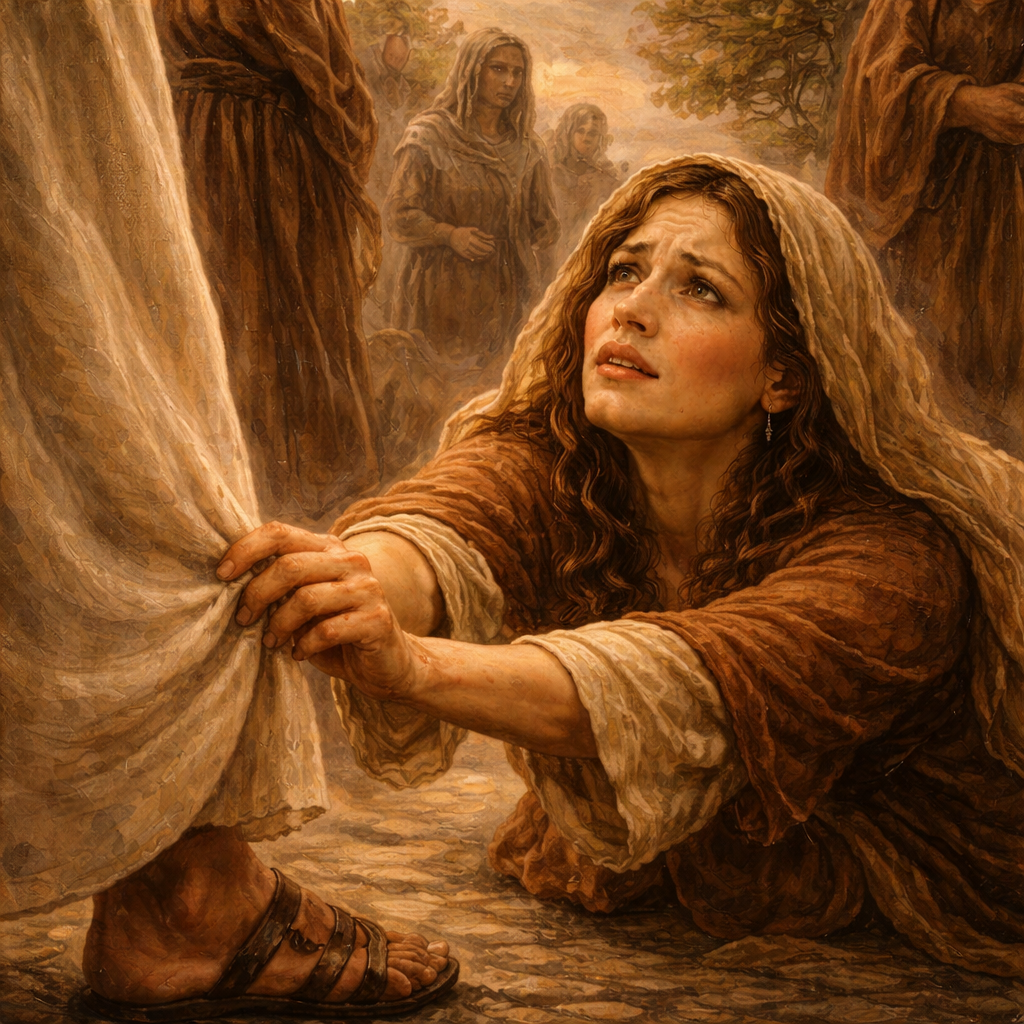
“Because she thought, ‘If I just touch His clothes, I will be healed.’”
Mark 5:28 (NIV)
Introduction: The Cost of Hoping Again
Hope is a fragile thing, especially after it has been disappointed repeatedly.
After twelve years of suffering, rejection, isolation, and failed attempts at healing, the woman in Mark 5 still carried a whisper of hope inside her. Not loud. Not confident. Not bold. It was a quiet, trembling hope, wrapped in fear, caution, and exhaustion.
And yet, it was hope nonetheless.
Scripture does not say she believed without doubt. It says she thought, “If I just touch His clothes…” That small internal sentence matters. It tells us her hope lived privately, carefully, almost protectively. She did not announce it. She barely allowed herself to feel it.
Many beloveds recognize this kind of hope. It is the kind that survives trauma by staying small. It is the kind that whispers instead of declares, because declaring hope feels too risky.
Proverbs 13:12 tells us, “Hope deferred makes the heart sick...”
When hope has been deferred long enough, the heart does not simply ache. It learns to protect itself from further disappointment.
Teaching: Why Trauma Makes Hope Feel Dangerous
Trauma conditions the heart to expect loss. When disappointment becomes familiar, hope begins to feel reckless rather than comforting.
Beloveds who have lived through domestic violence, childhood trauma, abandonment, emotional neglect, betrayal, depression, generational dysfunction, or relational instability often learn a painful lesson early. Expect less. Want less. Risk less.
Psychology explains this as protective adaptation. The nervous system learns to brace instead of believe. The mind learns to anticipate disappointment. The heart learns to stay guarded.
So the internal dialogue shifts:
Do not expect anything good.
Do not open your heart.
Do not get your hopes up.
Do not risk being hurt again.
This is not cynicism. It is self-preservation.
Scripture understands this condition deeply. Psalm 42:5 captures the tension: “Why, my soul, are you downcast? Why so disturbed within me? Put your hope in God.”
This is not denial of pain. It is an invitation to hope again, spoken gently to a weary soul.
For many beloveds, hope does not feel spiritual. It feels dangerous. It feels expensive. It feels like something that costs more than they can afford emotionally.
When Hope Dies, Intimacy Suffers
Hope and intimacy are inseparable. Where hope shuts down, intimacy cannot grow.
Why?
Because intimacy requires vulnerability. And vulnerability requires a belief, however small, that safety exists.
Women who have survived trauma build walls to stay alive. These walls are not failures. They are survival strategies. They keep danger out, but they also keep love out.
Without hope:
Trust collapses.
Vulnerability feels unsafe.
Relationships feel threatening.
Closeness becomes terrifying.
Even Jesus can feel too risky.
This is an important truth to name without shame. Many beloveds do not avoid Jesus because they lack faith. They avoid Him because intimacy feels unsafe. Trauma teaches that closeness leads to pain.
Jesus knows this.
Isaiah 30:15 says, “…In repentance and rest is your salvation, in quietness and trust is your strength...”
Notice what God offers first. Not demand. Not pressure. Rest. Quietness. Trust rebuilt slowly.
The Courage of Quiet Hope
The woman in Mark 5 did not approach Jesus publicly. She did not stand before Him. She did not ask aloud. She simply thought, “If I can just touch Him…”
This is not weak faith. This is wounded faith.
Her hope did not announce itself. It hid. It trembled. It barely dared to believe that healing was possible. But it moved her forward anyway.
Hebrews 11:1 tells us, “Now faith is confidence in what we hope for and assurance about what we do not see.”
Confidence does not always look bold. Sometimes it looks like one step taken despite fear.
Beloveds, Jesus does not measure the size of hope. He responds to its direction.
She did not have strong hope. She had surviving hope. And it was enough.
Conversational Pause for Beloveds
Pause here for a moment.
Not to fix anything.
Not to force belief.
Just to notice.
When did hope first start to feel dangerous?
When did disappointment teach you to brace instead of believe?
What did hope cost you the last time you tried to trust it?
Jesus does not rush beloveds past these questions. He sits with them.
Jesus Responds to Hope, Not Certainty
When the woman touches Jesus’ cloak, power flows immediately. Healing happens before conversation. Jesus does not ask for theological clarity. He does not require a confession of worthiness. He responds to hope, however fragile it is.
Romans 8:24 reminds us, “Hope that is seen is no hope at all.”
Hope lives in uncertainty. Jesus meets it there.
Beloveds, hope does not have to be fearless to be faithful. It simply has to reach in the right direction.
Anchor Scriptures for Meditation
Romans 15:13
“May the God of hope fill you with all joy and peace as you trust in Him...”
Lamentations 3:21–23
“Yet this I call to mind and therefore I have hope: Because of the Lord’s great love we are not consumed, for His compassions never fail. They are new every morning; great is your faithfulness.”
Daniel 3:25
“…I see four men… and the fourth looks like a son of the gods.”
Let these Scriptures remind beloveds that hope can be reborn even in the places where it once died.
Tammy’s Heart Note
There were seasons in my life when hope felt too expensive to risk. After growing up in generational dysfunction, after surviving abuse, after living under rejection and shame, hope did not feel comforting. It felt dangerous. Every time I opened my spirit, something painful happened. My nervous system learned to brace instead of believe. I longed for intimacy, but I was terrified of it. I did not just want closeness. I craved it. Not to mention, since I didn’t know what intimacy looked like, fear pushed the hope away of receiving it without any consciousness. Yet the walls I had built for survival kept everyone out, even God.
Then everything changed the day I drove myself off the cliff.
What happened at the bottom of that cliff was not metaphorical. It was life and death. When my car plunged into the ocean, the force pulled me under into the clamshell where vehicles disappear. I was not fighting for breath. The breath had already left me. I was not calling for help. It was too late. I was not reaching for God. I could not.
I was dying. Or I was already dead.
And that is when intimacy Himself came for me.
A brilliant, supernatural light exploded through the darkness. It was the kind of light that demands attention. The kind of presence that refuses to let you die without knowing you are loved. The light was so bright, I still put my hands across my face to shield the brightness. It was my Daniel 3:25 moment, my fourth-Man-in-the-fire encounter. Except my fire was the ocean floor.
Jesus stepped into my death.
He shattered the walls I had built.
He broke into the darkness that held me.
He reached me when I had no strength to reach for Him.
And He spoke directly to my spirit:
“Get up, beautiful. I’m not done with you yet. It is not time for you to come home. I have much for you to do for the kingdom of God.”
Hope returned in the very place hope had died. Intimacy was restored in the moment I believed God had abandoned me. Jesus chose me when I believed I was not worth choosing.
Hope did not flood back all at once. It came breath by breath.
But it came.
And it kept coming.
Scripture Reflection: When Jesus Enters Hopeless Places
Beloveds, Scripture is clear. God does not wait for hope to be strong before He intervenes. He enters when hope is extinguished.
Psalm 18:16 says, “He reached down from on high and took hold of me; He drew me out of deep waters.”
This is not symbolic language. It is rescue language.
Jonah cried out from the depths of the sea, and God heard him in Jonah 2:1-9. Elijah collapsed under despair, and God met him with sustenance and rest 1 Kings 19:4-9. The woman in Mark 5 reached from fear, and Jesus responded with power.
Hope does not resurrect itself. Jesus resurrects hope.
Psychology tells us that trauma collapses future orientation. Scripture tells us that God restores it. Where trauma says there is no future, Jesus says, “I am not done.”
Intimacy Restored When Hope Is Rebirthed
Hope and intimacy always return together.
When hope dies, intimacy feels impossible. When hope returns, intimacy becomes imaginable again. This is why Jesus does not simply heal the woman physically. He restores her relationally. He calls her Daughter. He restores connection.
1 John 4:18 says, “There is no fear in love. But perfect love drives out fear...”
This does not mean fear disappears instantly. It means love begins reclaiming territory fear once ruled.
Beloveds who have survived trauma often confuse intimacy with danger. Jesus patiently redefines intimacy as safety, presence, and rescue.
He does not demand closeness. He offers it.
Conversational Pause for Beloveds
Beloveds, pause again here.
Where has hope felt too expensive to risk?
Where did disappointment teach you to stop believing?
Where has intimacy felt dangerous instead of safe?
Jesus does not shame these places. He steps into them.
Jesus Honors Even the Smallest Reach
The woman in Mark 5 did not have bold faith. She had wounded faith. She had quiet faith. She had last-try faith.
But she reached anyway.
And Jesus honored that reach.
Matthew 12:20 says, “A bruised reed He will not break, and a smoldering wick He will not snuff out.”
Beloveds, Jesus does not extinguish fragile hope. He protects it.
Your trembling hope matters.
Your cautious reach matters.
Your quiet whisper matters.
Jesus responds to direction, not perfection.
Anchor Scriptures for Meditation
Romans 15:13
“May the God of hope fill you with all joy and peace as you trust in Him.”
Lamentations 3:21–23
“Yet this I call to mind and therefore I have hope: Because of the Lord’s great love we are not consumed, for His compassions never fail. They are new every morning; great is your faithfulness.”
Daniel 3:25
“The fourth looks like a son of gods.”
Jonah 2:1-9
“From inside the fish Jonah prayed to the Lord his God. He said: `In my distress I called to the Lord, and he answered me. From deep in the realm of the dead I called for help, and you listened to my cry. You hurled me into the depths, into the very heart of the seas, and the currents swirled about me; all your waves and breakers swept over me. I said, I have been banished from your sight; yet I will look again toward your holy temple. The engulfing waters threatened me, the deep surrounded me; seaweed was wrapped around my head. To the roots of the mountains I sank down; the earth beneath barred me in forever. But you, Lord my God, brought my life up from the pit. When my life was ebbing away, I remembered you, Lord, and my prayer rose to you, to your holy temple. ‘Those who cling to worthless idols turn away from God’s love for them. But I, with shouts of grateful praise, will sacrifice to you. What I have vowed I will make good. I will say, ‘Salvation comes from the Lord.’”
Let these Scriptures remind beloveds that hope is not foolish. It is holy.
Reflection Questions for Beloveds
When did hope begin to feel dangerous rather than comforting?
What walls were built to survive disappointment?
How has a lack of hope affected intimacy with others or with Jesus?
What small, quiet hope still lives beneath fear?
Where is Jesus inviting you to reach again, even if your reach trembles?
Closing Prayer
Jesus, You know how expensive hope can feel after repeated disappointment. You see the walls built for survival and the fear of letting them down. Meet beloveds in the places where hope died. Restore breath where despair lived. Step into the depths where strength is gone. Teach hearts how to hope again, gently and safely. Amen.
Closing Blessing
May hope rise again where it once collapsed.
May walls soften in the presence of perfect love.
May intimacy become safe, not threatening.
May the God who meets beloveds in the fire restore hope one breath at a time.
Beloveds, even the smallest hope is enough.
Even trembling faith is honored.
Even quiet reaches move Heaven.
Jesus honors fragile hope, always.
Until next time…
Keep being Beautiful You!