
Hagar - The God Who Finds the Forsaken
Hagar - The God Who Finds the Forsaken
Hagar
The God Who Finds the Forsaken
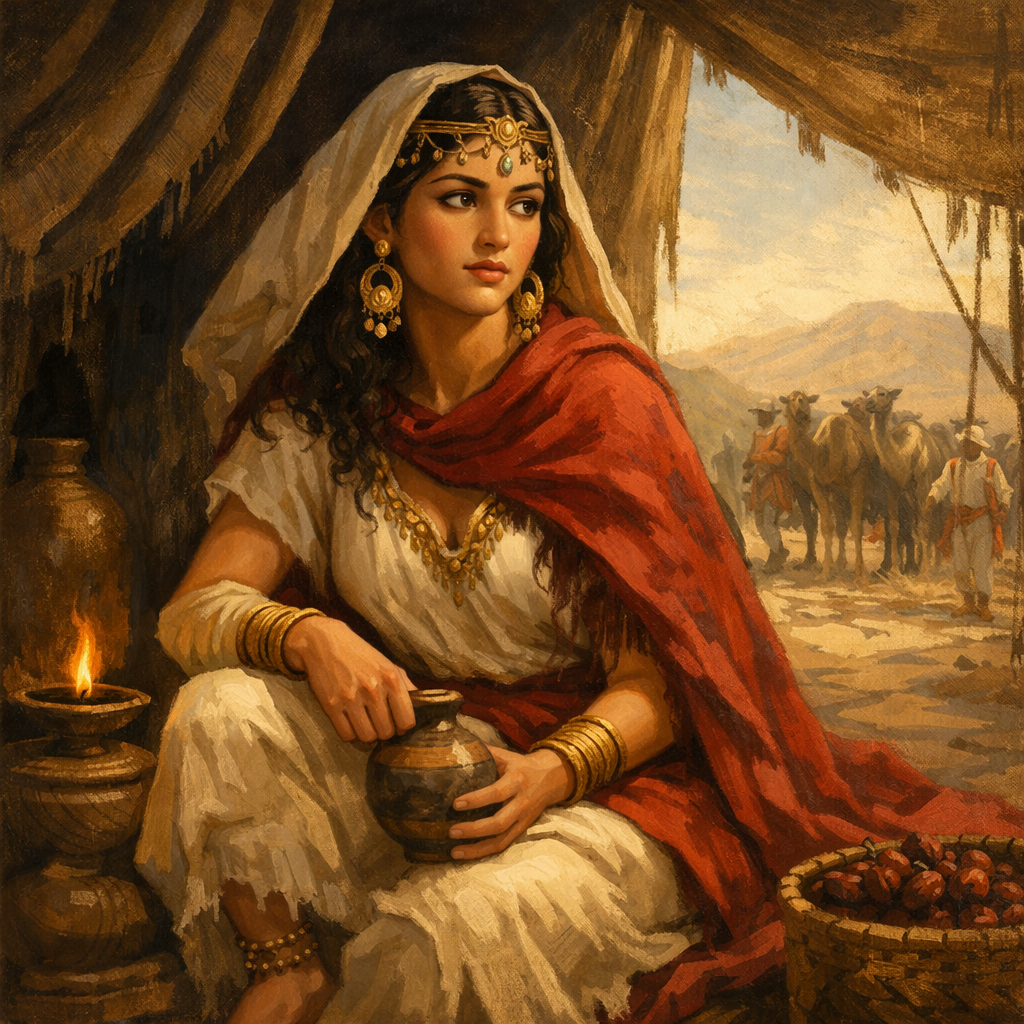
Hagar was an Egyptian slave girl living in Abraham and Sarah’s household; one of the most “religious” homes in Scripture. She didn’t choose her role or her circumstances; they were chosen for her. Hagar was used for her body, blamed when the arrangement caused conflict, and eventually driven into the desert with her child.
She is the first woman in the Bible to encounter God personally and the only one who gives Him a name: El Roi, “The God who sees me.”
Her story belongs to every woman who has been mistreated in the very place where she should have been safe.
Primary Scripture — Genesis 16:13, NIV
“You are the God who sees me.”
Expanded Reflection:
Hagar’s pain didn’t come from strangers; it came from people who claimed to follow God. That type of wound cuts differently. She was told what to do with her body, blamed for the consequences, and then cast aside when she became inconvenient. Her trauma wasn’t just emotional; it was spiritual.
Maybe part of your story carries that same sting…
hurt inside a relationship, a church, a marriage, a family, or a spiritual community that should have protected you, but instead misused you.
Hagar ran into the wilderness because she had nowhere else to go.
But here is the part religion rarely celebrates:
God went after her.
Not Abraham.
Not Sarah.
God Himself.
He didn’t ask her to pretend.
He didn’t shame her for running.
He didn’t minimize what she endured.
Instead, He met her in the desert, the place where she expected to die.
Daughter, hear this clearly:
God finds the forsaken; not the polished, not the powerful, not the ones who “fit” religious expectations, but the ones who were pushed out.
Hagar’s encounter shows us a God who sees injustice without covering it, who comforts without conditions, and who loves without permission from the people who wounded you.
He tells her:
“I see you. I hear your child. I will protect you. I will provide for you.”
Your wilderness is not the end of your story. It is the place where God reveals Himself personally, intimately, unmistakably.
Supporting Scriptures:
• Psalm 27:10 — “Though my father and mother forsake me, the Lord will receive me.”
• Isaiah 49:15–16 — God never forgets His daughters
• Luke 1:52 — God lifts the humble
Reflective Questions:
Where have you been hurt by people who should have cared for you?
What desert moments in your life turned into places where God met you?
What would it look like to believe God sees your story with the same clarity He saw Hagar’s?
Prayer:
El Roi, the God who sees me, step into the places in my life where I’ve been abandoned or misused. Meet me in my wilderness. Speak dignity over me where others spoke rejection. Protect what concerns me. Heal what was broken by people who bore Your name but not Your heart. Amen.
Outcome/Redemption Arc:
God protects Hagar, provides for Ishmael, and gives her promises equal in dignity to Israel’s. She becomes the first woman to name God; a spiritual authority no one can erase. Her abandonment becomes the setting for divine revelation.
Closing Blessing:
May her courage encourage us to trust God more fully; He who was faithful to her is faithful to us.