

Haven Hearts Bible Study
The Woman with the Issue of Blood
Being Known for Your Issues
When Your Issues Become Your Identity
Some women carry wounds that never seem to stop bleeding. Not the kind others can see, but the kind that live under the surface: in the memories, in the disappointments, in the places where trust broke and hope slipped away. Trauma can brand a woman. Shame can rename her. Pain can become the only story others seem to see.
For twelve long years, the woman in Scripture was known only by one thing. Not her name. Not her worth. Not her story. She was known for her “issue.” And the longer she bled, the smaller her world became. Friends drifted. Support faded. Isolation settled in. She learned to live unseen, unheard, untouched.
But Jesus saw her.
He felt her reach before anyone else noticed her presence. He stopped an entire crowd for one woman who had forgotten she mattered. And He did not call her “unclean,” “broken,’ or “the woman with the issue.” He called her Daughter.
This Bible study is for every woman who has ever felt defined by what hurt her. For every woman who has lived with hidden wounds, unspoken loneliness, private battles, or the kind of pain that shapes identity. Here, we explore how Jesus meets us in the places we hide, restores what shame has stolen, and gives us a name stronger than any issue we carry.
Welcome to a study for the heart that needs healing in quiet places.
Welcome to Haven Hearts.
Participation is subject to established confidentiality and boundary guidelines!

Haven Hearts Bible Study - Week 1 -When Your Issues Become Your Identity
When you’re known for your issues.
Haven Hearts Bible Study - Week 1 -When Your Issues Become Your Identity
And like many trauma survivors, I repeated what I knew. I married my father and mother, an alcoholic, abusive man, because dysfunction feels familiar when it is all you have ever known. I thought I was choosing differently, but I was reliving the only patterns my body understood.
I told myself I would be different. I told myself I would break the pattern. But years later, I found myself holding a beer in my hand and yelling at my oldest son.
He was not responding to my words.
He was not reacting to my anger.
His eyes were locked on the beer in my hand.
When Your Issues Become Your Identity
Haven Hearts Bible Study – Week 1
Being Known For Your Issues
When Your Issues Become Your Identity
“A woman was there who had been subject to bleeding for twelve years. She had suffered a great deal under the care of many doctors… When she heard about Jesus, she came up behind Him in the crowd and touched His cloak, because she thought, `If I just touch His clothes, I will be healed. Immediately her bleeding stopped and she felt in her body that she was freed from her suffering.”
Mark 5:25–29 (NIV)
Introduction: Being Known for Your Issues
Some wounds do not bleed on the outside, yet they never stop draining life on the inside. Many women carry pain that lives beneath the surface, in memories that resurface without warning, in reactions they do not fully understand, and in patterns they never consciously chose. Scripture gives language to this reality long before psychology ever named it.
Proverbs 13:12 says, “Hope deferred makes the heart sick.”
When hope is deferred long enough, the heart does not just ache. It adapts. It begins to live differently.
Trauma has a way of branding a woman. Shame has a way of renaming her. Pain, when it goes on long enough, begins to feel like the truest thing about her story. Many women recognize this moment quietly. They may not have words for it, but they feel it. They realize that what happened to them has begun to shape how they see themselves.
For twelve long years, the woman in Mark 5 was known only by one thing. Scripture does not tell us her name. It does not tell us who loved her, what she dreamed of, or what she had lost along the way. It tells us her issue. She is remembered by what hurt her.
That alone should cause us to pause.
How often are women remembered for what broke them instead of who they are?
The longer she bled, the smaller her world became. According to Levitical law, her condition rendered her ceremonially unclean. This meant isolation from worship, from community, and from physical connection. She lived with the constant knowledge that her presence complicated things. Over time, isolation does something dangerous. It convinces a person that they are the problem.
Many women reading this recognize that feeling. Not because of physical bleeding, but because trauma has made them feel like their pain takes up too much space.
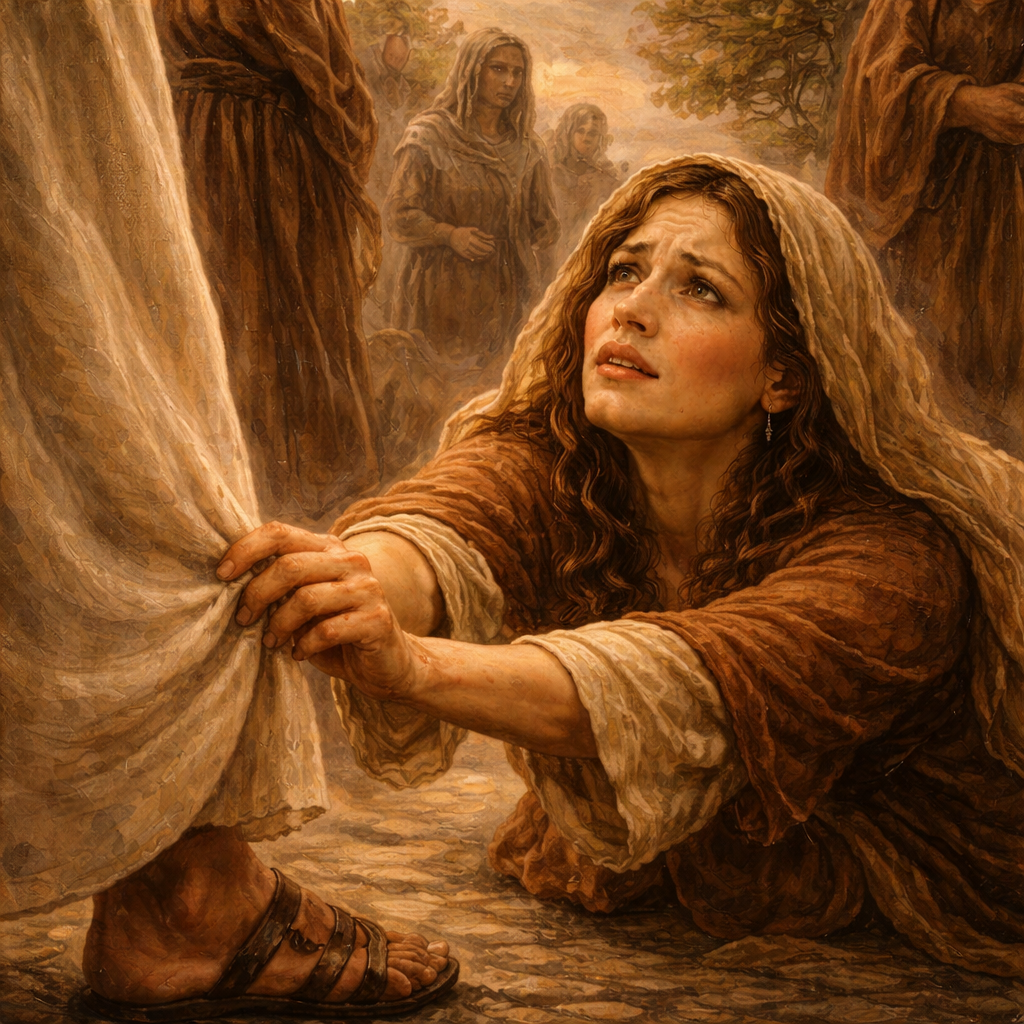
But Jesus saw her.
Mark 5 tells us that Jesus felt power leave Him the moment she touched His cloak. Before anyone else noticed her presence, He noticed her faith. He stopped an entire crowd for one woman who had learned not to be seen.
And when He spoke to her later in the passage, He did not call her “unclean.”
He did not call her “broken.”
He did not call her “the woman with the issue.”
He called her Daughter.
That single word rewrote twelve years of identity.
This Bible study is for women who know what it feels like to be defined by what wounded them. It is for women who carry trauma quietly, who learned early how to survive dysfunction, and who may not yet realize that what they endured was not normal, even if it was familiar.
Psalm 139:1–2 reminds us, “You have searched me, Lord, and You know me… You perceive my thoughts from afar.”
Jesus does not meet women at the surface. He meets them where the story began.
Teaching: When Issues Become Identity
There is a kind of pain that outlasts strength. It does not come and go. It stays. Over time, it stops feeling like something a woman has and starts feeling like something she is.
The woman in this passage woke up every day for twelve years knowing she would bleed again. Twelve years of exhaustion. Twelve years of disappointment. Twelve years of hoping that the next attempt might finally be the one that works.
Mark 5:26 tells us she “had suffered a great deal under the care of many doctors and had spent all she had...” Not only was she physically depleted, she was emotionally and financially drained. Many women recognize this pattern. They have tried everything they know to try. Counseling. Relationships. Avoidance. Self-improvement. Silence.
Over time, her issue became her name.
Scripture never records anyone asking her how she was doing. It records her condition. This matters because long-term pain does not just affect the body. It affects identity.
Psychology explains that when trauma is ongoing, especially when it begins early in life, the brain adapts for survival. The nervous system learns to expect danger. The mind learns to scan for threat. The body holds tension. Over time, these adaptations feel like personality, but they are actually responses.
Jesus never mistakes adaptation for identity.
Isaiah 42:3 says, “A bruised reed He will not break, and a smoldering wick He will not snuff out.”
Jesus does not come to finish off what trauma started. He comes to restore what trauma distorted.
Many women today live inside the same quiet prison this woman lived in. Their wounds may not be physical, but they bleed into daily life:
Abuse that fractures trust.
Abandonment that shapes attachment.
Domestic violence that rewires survival.
Depression that dulls hope.
Anxiety that isolates.
Generational dysfunction that normalizes chaos.
Issues begin to feel like labels. Labels begin to feel like truth.
But Scripture tells us otherwise.
Isaiah 43:1 declares, “I have summoned you by name; you are Mine.”
Identity does not come from pain. It comes from the One who names.
A Hidden Reach
In her exhaustion and isolation, the woman makes one small, trembling decision. She reaches for Jesus.
Mark tells us she came up behind Him. That detail matters. She did not announce herself. She did not draw attention. Shame rarely does. Shame whispers that invisibility is safer.
Many women understand this moment deeply. They do not feel capable of bold faith. They feel capable of one small reach. One quiet prayer. One hesitant step toward help.
Psychology recognizes this as a moment of agency returning after long helplessness. Faith recognizes it as courage.
Hebrews 11:6 tells us, “Without faith it is impossible to please God.”
Faith does not have to be loud. It has to be real.
She touches His cloak, and immediately the bleeding stops. But Jesus does not let the moment pass. He stops and asks, “Who touched Me?”
This is not because He lacks knowledge. It is because He knows she needs more than healing. She needs restoration.
Identity Begins to Shift
When Jesus turns toward her later in the passage and calls her Daughter, something irreversible happens. Identity is restored.
Daughter means belonging.
Daughter means safety.
Daughter means inheritance.
Romans 8:15 says, “…The Spirit you received brought about your adoption… And by Him we cry, ‘Abba, Father.’”
Jesus restores family where trauma created exile.
Psychology tells us trauma fractures identity. Scripture shows us Jesus restoring it. Healing is not complete when pain stops. Healing is complete when identity is reclaimed.
Generational Dysfunction: When Trauma Feels Normal
Many women struggle to recognize trauma because it was woven into their earliest experiences. When dysfunction is generational, it becomes the water a child swims in. Addiction. Abuse. Emotional neglect. Volatility. Silence.
It was not normal.
It felt normal because it was familiar.
Exodus 34:7 speaks of the effects of sin echoing through generations, but Scripture never leaves us there. Ezekiel 18 makes clear that cycles can be interrupted.
Jesus enters generational patterns to break them.
2 Corinthians 5:17 says, “Therefore, if anyone is in Christ, the new creation has come...”
New creation means old patterns do not get the final word.
Generational Dysfunction and the Moment of Awakening
When Jesus interrupts generational patterns, He rarely does so gently at first. He does so truthfully. Revelation often arrives as discomfort before it becomes freedom.
Many beloveds come to faith carrying stories they did not choose. They were born into environments shaped by addiction, abuse, emotional volatility, neglect, silence, or fear. These patterns were not explained. They were not processed. They were survived. Over time, what was dysfunctional began to feel normal, not because it was healthy, but because it was familiar.
Scripture gives language to this reality long before psychology does. In Exodus 20:5, God acknowledges that the consequences of sin and brokenness echo through generations. Yet Scripture also makes something else clear. God never intended for cycles to continue unchallenged.
Ezekiel 18:20 declares, “The one who sins is the one who will die. The child will not share the guilt of the parent...”
This passage is not about denial of impact. It is about responsibility and redemption. It tells us that while patterns may be inherited, they are not irreversible.
Psychology affirms what Scripture reveals. Adverse childhood experiences shape nervous systems, attachment styles, emotional regulation, and identity formation. A child raised in chaos learns hypervigilance. A child raised in silence learns suppression. A child raised in volatility learns to anticipate threat.
Beloveds, this is important. These adaptations were not moral failures. They were survival responses. But survival responses are not meant to become lifelong identities.
Jesus does not condemn survival. He heals what made survival necessary.
Tammy’s Heart Note
There was a season when pain had become my identity, and I could not see a way out of it. I grew up in generations of alcohol and abuse. The weight of what I lived through cannot be measured in years. It was inherited pain and inherited patterns that were never talked about, never worked through, never processed, never healed. These wounds lived on both sides of my family. My father carried them. His father carried them. My mother’s family carried the same brokenness. I was born into a cycle I did not create but learned to survive inside.
And like many trauma survivors, I repeated what I knew. I married my father and mother, an alcoholic, abusive man, because dysfunction feels familiar when it is all you have ever known. I thought I was choosing differently, but I was reliving the only patterns my body understood.
I told myself I would be different. I told myself I would break the pattern. But years later, I found myself holding a beer in my hand and yelling at my oldest son.
He was not responding to my words.
He was not reacting to my anger.
His eyes were locked on the beer in my hand.
In that moment, God showed me a truth I did not want to admit. I was repeating the very cycle that had tormented my family for generations. Not just repeating behavior, but repeating identity, trauma responses, and learned survival patterns that shape a person without consent.
Right there, with my son watching and my heart breaking, I told the Lord I was done carrying it. I asked Him to break every generational curse off my lineage and off my children. That moment shattered me, not to destroy me but to wake me up. I did not want my story to become “the woman with the issue” like the generations before me. I wanted Jesus to rewrite my identity and theirs.
And He did.
Scripture Reflection: When Jesus Interrupts the Cycle
Beloveds, this moment matters deeply. Scripture is filled with moments where God interrupts generational trajectories through awareness and surrender.
Psalm 78:5–7 speaks of God’s desire that each generation would teach the next, “…so the next generation would know them… and would not forget His deeds but would keep His commands.” When teaching is replaced by silence, cycles repeat. When truth is restored, cycles break.
Jesus specializes in these interruptions.
In John 8, Jesus meets a woman caught in a generational web of shame and exploitation. He does not deny her past. He does not minimize her pain. He tells her, “Go now and leave your life of sin.” Not as condemnation, but as invitation into a new identity.
2 Corinthians 5:17 declares, “Therefore, if anyone is in Christ, the new creation has come: The old has gone, the new is here.”
New creation does not mean pretending the past did not exist. It means the past no longer defines the future.
Psychology names this moment as insight. Faith names it repentance. Both point toward transformation.
Identity Restored: From Issue to Beloved
When Jesus calls the woman in Mark 5 “Daughter,” He restores what trauma and isolation tried to erase. Daughter is not a sentimental word. It is a covenantal one. It establishes belonging. It restores inheritance. It secures identity.
Galatians 4:7 reminds us, “So you are no longer a slave, but God’s child; and since you are His child, God has made you also an heir.”
Beloveds, many women have lived as though they are still defined by what wounded them. Abuse becomes identity. Addiction becomes destiny. Trauma becomes personality. But Jesus refuses these definitions.
Psychology explains how identity fractures under prolonged trauma. Scripture reveals how identity is restored under divine love.
Healing is not only the removal of pain. Healing is the restoration of truth.
Conversational Pause for Reflection
Beloveds, pause here for a moment.
What if the issue that has followed a woman for years is not the truest thing about her?
What if the patterns that felt normal were never meant to be permanent?
What if Jesus is not asking for perfection, but for awareness and surrender?
These are not questions to rush through. They are questions to sit with. Jesus often asks questions not because He needs answers, but because beloveds need clarity.
Anchor Scriptures for Meditation
Psalm 34:18
“The Lord is close to the brokenhearted and saves those who are crushed in spirit.”
Isaiah 43:1
“But now, this is what the Lord says—He who created you…He who formed you…’Do not fear, for I have redeemed you; I have summoned you by name; you are mine.”
Luke 13:12
“…Woman, you are set free from your infirmity.”
These Scriptures anchor identity in Christ, not in trauma. Beloveds are invited to return to these passages throughout the week, allowing truth to settle where lies once lived.
Reflection Questions for Beloveds
In what ways has long-term pain shaped identity or self-understanding?
Which patterns felt normal growing up that may have actually been rooted in dysfunction?
Where has survival been mistaken for identity?
What does it stir to imagine Jesus calling a woman “Daughter” instead of by her issue?
What part of the story feels ready to be brought into the light so healing can continue?
Closing Prayer
Jesus, You see every beloved who has learned to survive what was never meant to be normal. You know the wounds that shaped identity and the patterns that felt familiar because they were inherited. Heal what was never meant to be endured. Interrupt every cycle that no longer belongs. Restore what shame has stolen. Speak truth louder than trauma. Call Your beloveds by name and teach them who they truly are in You. Amen.
Closing Blessing
May the Lord meet every beloved gently in the places that were hidden.
May shame lose its voice and loosen its grip.
May false names fall away and truth take root.
May healing reach backward and forward through generations.
May identity be anchored in love, not pain.
Beloveds, you are more than what wounded you.
You are more than what you survived.
You are His, seen, known, and deeply held.
Until next time…
Keep being Beautiful You!

Haven Hearts Bible Study - Week 2 - When Shame Pushes Beloveds Into Isolation
When Shame Pushes Beloveds Into Isolation
When Shame Pushes Beloveds Into Isolation
When Shame Pushes Beloveds Into Isolation
“When she heard about Jesus, she came up behind Him in the crowd and touched His cloak.”
Mark 5:27 (NIV)
Introduction: The Direction Shame Sends Us
She did not approach Jesus boldly.
She did not stand before Him.
She did not call out His name.
She came from behind.
Scripture does not waste words. The direction from which this woman approached Jesus tells us something essential about her inner world. She did not come face to face. She came quietly, carefully, hoping to remain unseen. This is the posture shame produces.
Shame does not always tell a woman she is sinful. More often, it tells her she is unworthy of being seen.
Many beloveds recognize this posture instinctively. Shame does not usually shout. It whispers. It convinces. It shrinks. It sends women into hiding places that feel safer than exposure.
Genesis 3:8 tells us that after sin entered the world, Adam and Eve hid from God. Shame always drives hiding. It always pulls away from connection. It always isolates.
The woman in Mark 5 did not hide because she lacked faith. She hid because shame had trained her to.
Teaching: What Shame Does to Identity
Shame convinces a woman that she is too messy, too broken, too embarrassing, or too burdensome to be known. It attaches lies to identity and repeats them until they feel true.
“Stay small.”
“Stay quiet.”
“Do not let them see you.”
“No one wants the truth about you.”
Proverbs 18:1 warns, “Whoever isolates himself seeks his own desire; he breaks out against all sound judgment” (ESV).
This verse is not condemnation. It is description. Isolation clouds discernment. Shame distorts perception.
The woman in Mark 5 carried more than a physical condition. She carried cultural and spiritual shame imposed by the laws of her day. According to Levitical law, a woman with continuous bleeding was considered ritually unclean. This meant forced separation, not chosen solitude.
She could not be touched.
She could not touch others.
Anything she touched became unclean.
Anyone she touched became unclean.
She was restricted from worship.
She was excluded from community.
This was not emotional preference.
This was enforced isolation.
For twelve years, the world told her that her presence contaminated everything it touched. Over time, this message sinks deep. Shame does not remain external. It becomes internalized.
Psychology confirms what Scripture reveals. When a person is repeatedly treated as dangerous, unwanted, or burdensome, the nervous system adapts. The body learns to minimize presence. The mind learns to withdraw. The heart learns to expect rejection.
Her issue did not just affect her body. It shaped her identity.
She was no longer known by name.
She was known by condition.
Many beloveds know this experience intimately. Their shame may not come from ritual law, but from family systems, abuse, neglect, betrayal, or rejection. The message is the same.
“You are the problem.”
Shame Pushes Toward Isolation, and Isolation Deepens the Wound
When a woman withdraws, her world shrinks. This is not weakness. It is consequence.
Thoughts grow louder.
Fears feel more convincing.
Coping becomes secretive.
Pain grows too heavy to carry alone.
Isolation is not a personality trait. It is a trauma response.
It forms when:
no one checks in
no one notices the withdrawal
no one helps process the wound
no one asks deeper questions
no one provides presence
Psalm 102:7 captures this experience poignantly: “I lie awake; I have become like a bird alone on a roof.”
This is not poetic exaggeration. It is emotional truth.
Psychology shows us that isolation intensifies depression and hopelessness. Scripture shows us that isolation is the enemy’s preferred environment.
Ecclesiastes 4:10 says, “If either of them falls down, one can help the other up. But pity anyone who falls and has no one to help them.”
Shame builds the prison.
Isolation locks the door.
Left unbroken, isolation becomes dangerous. It is the soil where despair grows, where distorted thinking feels logical, and where suicidal thoughts can begin to masquerade as relief.
This is not because a woman is weak.
It is because she has been alone with pain for too long.
Conversational Pause for Beloveds
Beloveds, pause here for a moment.
Not to analyze.
Not to fix.
Simply to notice.
When pain first entered the story, was there anyone who helped process it?
When shame whispered lies, was there anyone who spoke truth over them?
When withdrawal began, did anyone step closer?
These questions are not meant to accuse. They are meant to bring clarity. Jesus often begins healing by helping beloveds name what was missing.
Jesus Meets Women in the Places They Hide
Even though she approached Him secretly, hidden behind the crowd, Scripture tells us something remarkable.
Jesus felt her.
Mark 5:30 says, “At once Jesus realized that power had gone out from Him.”
He noticed what others did not. He responded to what she tried to conceal.
Her isolation did not disqualify her.
Her shame did not repel Him.
Her secrecy did not make her invisible.
Psalm 139:11–12 declares, “If I say, ‘Surely the darkness will hide me…’ even the darkness will not be dark to You.”
What she hid, He healed.
Where she shrank back, He stepped close.
The place she thought was safest to hide became the place of restoration.
Jesus does not wait for beloveds to come forward confidently. He meets those who only have the strength to reach from behind.
BEING KNOWN FOR YOUR ISSUES
Tammy’s Heart Note
Shame first entered my life through a high-school breakup. I did not just feel rejected. I felt replaced, unworthy, and exposed. I had never felt like I belonged anywhere, and that moment seemed to confirm every lie shame whispered. I withdrew. No one checked in. No one asked why I disappeared. No one helped me process the pain that was swallowing me whole.
I grew up believing love was performance-based. If I was chosen, I mattered. If I was not chosen, then I must not be worth choosing.
Isolation became my hiding place, but it also became my undoing.
I began drinking beer and smoking pot, not because I enjoyed it, but because I hoped it would numb the ache and give me somewhere to belong. Instead, it deepened the isolation. I did not fit there either. Shame grew heavier, and depression settled over me like a thick fog.
Shame led me to isolation.
Isolation led me to depression.
Depression led me to suicidality.
I attempted suicide five times. Five.
Each attempt came from the same place of silence and pain. My fifth attempt, the day I drove myself off the cliff, was the breaking point of a girl who felt unseen, unheard, and unworthy, with no one reaching in to speak life over the darkness.
This is what shame does.
It isolates.
And isolation, left unbroken, becomes deadly.
Scripture Reflection: God Does Not Abandon the Isolated
Beloveds, Scripture never minimizes the danger of isolation. It also never abandons those trapped within it.
In 1 Kings 19, the prophet Elijah collapses under the weight of despair. After confronting evil boldly, he runs into isolation and asks God to let him die. Elijah is not weak. He is depleted. He is isolated. He is overwhelmed.
And how does God respond?
God does not shame him.
God does not lecture him.
God does not demand faith.
Instead, Scripture says God provides rest, nourishment, and gentle presence. “Get up and eat, for the journey is too much for you” (1 Kings 19:7).
Psychology affirms what Scripture models here. When a person is overwhelmed by trauma and despair, the first need is safety and regulation, not correction. Jesus knows this. God knew this with Elijah. And He knows it with beloveds today.
Psalm 68:6 tells us, “God sets the lonely in families...”
This does not always mean immediate community. Sometimes it begins with one safe presence, one interruption, one moment where isolation is no longer absolute.
When Isolation Distorts Reality
Isolation does something insidious. It does not just remove people. It distorts perception.
When beloveds are alone with unprocessed trauma, thoughts begin to echo without challenge. Lies feel logical. Hopelessness feels permanent. Pain feels inescapable.
Psychology identifies this as cognitive constriction. Trauma narrows perspective until options feel limited and escape feels necessary. Scripture describes this experience long before psychology names it.
Lamentations 3:17–18 says, “I have been deprived of peace; I have forgotten what prosperity is. So I say, ‘My splendor is gone and all that I had hoped from the Lord.’”
Yet just a few verses later, the tone shifts. “Yet this I call to mind and therefore I have hope: Because of the Lord’s great love we are not consumed, for His compassions never fail.” (Lamentations 3:21–22).
Hope often returns not because circumstances change, but because isolation is interrupted.
Jesus Interrupts Isolation with Presence
The woman in Mark 5 believed that if she could remain unseen, she could remain safe. Shame taught her that invisibility was protection. But Jesus refused to allow her healing to happen in hiding.
After she touched Him, Jesus stopped and asked, “Who touched my clothes?” (Mark 5:30).
This was not exposure for humiliation. It was invitation into restoration.
Jesus knew that unnamed healing leaves shame intact. He wanted her story brought into the light where isolation loses its power.
John 1:5 reminds us, “The light shines in the darkness, and the darkness has not overcome it.”
Beloveds, the light Jesus brings is not harsh. It is healing. It does not force confession. It invites honesty.
What she hid, He healed.
Where she withdrew, He drew near.
Where shame silenced her, He restored her voice.
Conversational Pause for Beloveds
Beloveds, pause again here.
Isolation does not begin loudly. It begins quietly. Often it begins with withdrawal that no one notices.
Where did isolation first feel safer than connection?
Where did silence feel less risky than honesty?
Where did shame convince you that staying hidden was the best option?
Jesus does not ask these questions to reopen wounds. He asks them to open doors.
The Difference Between Solitude and Isolation
Scripture makes a clear distinction between solitude and isolation.
Jesus often withdrew to lonely places to pray. That was intentional solitude. It restored Him.
Isolation, however, is not chosen for restoration. It is chosen for survival. It is driven by fear, shame, and pain.
Hebrews 10:25 encourages believers not to give up meeting together, not as obligation, but as protection. Connection safeguards mental and spiritual health.
Psychology echoes this truth. Healing happens in relationship. Trauma heals in safe connection. Shame loses power when it is met with compassion.
Jesus embodies this perfectly. He does not heal from a distance. He heals with presence.
Anchor Scriptures for Meditation
Psalm 139:11–12
“If I say, ‘Surely the darkness will hide me…’ even the darkness will not be dark to You.”
Isaiah 41:10
“Ao do not fear, for I am with you… I will strengthen you and help you.”
1 Kings 19:5–7
God meets Elijah in isolation with rest, nourishment, and gentle presence.
Let these Scriptures remind beloveds that hidden places are not unseen places.
Reflection Questions for Beloveds
When has shame pushed you toward hiding rather than connection?
How has isolation affected your thoughts, emotions, or decisions?
What support did you need during your most isolating seasons that you did not receive?
Where might Jesus be inviting you out of hiding and into gentle connection now?
What would safety look like if isolation no longer had the final word?
Closing Prayer
Jesus, You see every beloved who has learned to hide in order to survive. You know the power shame has had and the damage isolation has caused. Enter the places where silence grew heavy. Interrupt the lies that whispered death instead of hope. Bring light into the shadows without judgment. Restore safety, connection, and truth. Teach beloveds that they are not alone and never have been. Amen.
Closing Blessing
May the Lord enter every shadow where shame once ruled.
May isolation loosen its grip on heart and mind.
May every lie spoken over worth fall silent.
May connection replace concealment.
May light fill even the darkest memories.
Beloveds, you are not alone.
You are not forgotten.
You are not too broken to be found.
Jesus meets beloveds in the places they hide.
And He meets them there with life.
Until next time…
Keep being Beautiful You!
Haven Hearts Bible Studies - Week 3 - When Hope Feels Too Costly
Haven Hearts Bible Study – Week 3
Being Known For Your Issues
When Hope Feels Too Expensive
“For she thought, ‘If I just touch His clothes, I will be healed.’”
--Mark 5:28 (NIV)
When Hope Feels Too Costly
When Hope Feels Too Costly
“Because she thought, ‘If I just touch His clothes, I will be healed.’”
Mark 5:28 (NIV)
Introduction: The Cost of Hoping Again
Hope is a fragile thing, especially after it has been disappointed repeatedly.
After twelve years of suffering, rejection, isolation, and failed attempts at healing, the woman in Mark 5 still carried a whisper of hope inside her. Not loud. Not confident. Not bold. It was a quiet, trembling hope, wrapped in fear, caution, and exhaustion.
And yet, it was hope nonetheless.
Scripture does not say she believed without doubt. It says she thought, “If I just touch His clothes…” That small internal sentence matters. It tells us her hope lived privately, carefully, almost protectively. She did not announce it. She barely allowed herself to feel it.
Many beloveds recognize this kind of hope. It is the kind that survives trauma by staying small. It is the kind that whispers instead of declares, because declaring hope feels too risky.
Proverbs 13:12 tells us, “Hope deferred makes the heart sick...”
When hope has been deferred long enough, the heart does not simply ache. It learns to protect itself from further disappointment.
Teaching: Why Trauma Makes Hope Feel Dangerous
Trauma conditions the heart to expect loss. When disappointment becomes familiar, hope begins to feel reckless rather than comforting.
Beloveds who have lived through domestic violence, childhood trauma, abandonment, emotional neglect, betrayal, depression, generational dysfunction, or relational instability often learn a painful lesson early. Expect less. Want less. Risk less.
Psychology explains this as protective adaptation. The nervous system learns to brace instead of believe. The mind learns to anticipate disappointment. The heart learns to stay guarded.
So the internal dialogue shifts:
Do not expect anything good.
Do not open your heart.
Do not get your hopes up.
Do not risk being hurt again.
This is not cynicism. It is self-preservation.
Scripture understands this condition deeply. Psalm 42:5 captures the tension: “Why, my soul, are you downcast? Why so disturbed within me? Put your hope in God.”
This is not denial of pain. It is an invitation to hope again, spoken gently to a weary soul.
For many beloveds, hope does not feel spiritual. It feels dangerous. It feels expensive. It feels like something that costs more than they can afford emotionally.
When Hope Dies, Intimacy Suffers
Hope and intimacy are inseparable. Where hope shuts down, intimacy cannot grow.
Why?
Because intimacy requires vulnerability. And vulnerability requires a belief, however small, that safety exists.
Women who have survived trauma build walls to stay alive. These walls are not failures. They are survival strategies. They keep danger out, but they also keep love out.
Without hope:
Trust collapses.
Vulnerability feels unsafe.
Relationships feel threatening.
Closeness becomes terrifying.
Even Jesus can feel too risky.
This is an important truth to name without shame. Many beloveds do not avoid Jesus because they lack faith. They avoid Him because intimacy feels unsafe. Trauma teaches that closeness leads to pain.
Jesus knows this.
Isaiah 30:15 says, “…In repentance and rest is your salvation, in quietness and trust is your strength...”
Notice what God offers first. Not demand. Not pressure. Rest. Quietness. Trust rebuilt slowly.
The Courage of Quiet Hope
The woman in Mark 5 did not approach Jesus publicly. She did not stand before Him. She did not ask aloud. She simply thought, “If I can just touch Him…”
This is not weak faith. This is wounded faith.
Her hope did not announce itself. It hid. It trembled. It barely dared to believe that healing was possible. But it moved her forward anyway.
Hebrews 11:1 tells us, “Now faith is confidence in what we hope for and assurance about what we do not see.”
Confidence does not always look bold. Sometimes it looks like one step taken despite fear.
Beloveds, Jesus does not measure the size of hope. He responds to its direction.
She did not have strong hope. She had surviving hope. And it was enough.
Conversational Pause for Beloveds
Pause here for a moment.
Not to fix anything.
Not to force belief.
Just to notice.
When did hope first start to feel dangerous?
When did disappointment teach you to brace instead of believe?
What did hope cost you the last time you tried to trust it?
Jesus does not rush beloveds past these questions. He sits with them.
Jesus Responds to Hope, Not Certainty
When the woman touches Jesus’ cloak, power flows immediately. Healing happens before conversation. Jesus does not ask for theological clarity. He does not require a confession of worthiness. He responds to hope, however fragile it is.
Romans 8:24 reminds us, “Hope that is seen is no hope at all.”
Hope lives in uncertainty. Jesus meets it there.
Beloveds, hope does not have to be fearless to be faithful. It simply has to reach in the right direction.
Anchor Scriptures for Meditation
Romans 15:13
“May the God of hope fill you with all joy and peace as you trust in Him...”
Lamentations 3:21–23
“Yet this I call to mind and therefore I have hope: Because of the Lord’s great love we are not consumed, for His compassions never fail. They are new every morning; great is your faithfulness.”
Daniel 3:25
“…I see four men… and the fourth looks like a son of the gods.”
Let these Scriptures remind beloveds that hope can be reborn even in the places where it once died.
Tammy’s Heart Note
There were seasons in my life when hope felt too expensive to risk. After growing up in generational dysfunction, after surviving abuse, after living under rejection and shame, hope did not feel comforting. It felt dangerous. Every time I opened my spirit, something painful happened. My nervous system learned to brace instead of believe. I longed for intimacy, but I was terrified of it. I did not just want closeness. I craved it. Not to mention, since I didn’t know what intimacy looked like, fear pushed the hope away of receiving it without any consciousness. Yet the walls I had built for survival kept everyone out, even God.
Then everything changed the day I drove myself off the cliff.
What happened at the bottom of that cliff was not metaphorical. It was life and death. When my car plunged into the ocean, the force pulled me under into the clamshell where vehicles disappear. I was not fighting for breath. The breath had already left me. I was not calling for help. It was too late. I was not reaching for God. I could not.
I was dying. Or I was already dead.
And that is when intimacy Himself came for me.
A brilliant, supernatural light exploded through the darkness. It was the kind of light that demands attention. The kind of presence that refuses to let you die without knowing you are loved. The light was so bright, I still put my hands across my face to shield the brightness. It was my Daniel 3:25 moment, my fourth-Man-in-the-fire encounter. Except my fire was the ocean floor.
Jesus stepped into my death.
He shattered the walls I had built.
He broke into the darkness that held me.
He reached me when I had no strength to reach for Him.
And He spoke directly to my spirit:
“Get up, beautiful. I’m not done with you yet. It is not time for you to come home. I have much for you to do for the kingdom of God.”
Hope returned in the very place hope had died. Intimacy was restored in the moment I believed God had abandoned me. Jesus chose me when I believed I was not worth choosing.
Hope did not flood back all at once. It came breath by breath.
But it came.
And it kept coming.
Scripture Reflection: When Jesus Enters Hopeless Places
Beloveds, Scripture is clear. God does not wait for hope to be strong before He intervenes. He enters when hope is extinguished.
Psalm 18:16 says, “He reached down from on high and took hold of me; He drew me out of deep waters.”
This is not symbolic language. It is rescue language.
Jonah cried out from the depths of the sea, and God heard him in Jonah 2:1-9. Elijah collapsed under despair, and God met him with sustenance and rest 1 Kings 19:4-9. The woman in Mark 5 reached from fear, and Jesus responded with power.
Hope does not resurrect itself. Jesus resurrects hope.
Psychology tells us that trauma collapses future orientation. Scripture tells us that God restores it. Where trauma says there is no future, Jesus says, “I am not done.”
Intimacy Restored When Hope Is Rebirthed
Hope and intimacy always return together.
When hope dies, intimacy feels impossible. When hope returns, intimacy becomes imaginable again. This is why Jesus does not simply heal the woman physically. He restores her relationally. He calls her Daughter. He restores connection.
1 John 4:18 says, “There is no fear in love. But perfect love drives out fear...”
This does not mean fear disappears instantly. It means love begins reclaiming territory fear once ruled.
Beloveds who have survived trauma often confuse intimacy with danger. Jesus patiently redefines intimacy as safety, presence, and rescue.
He does not demand closeness. He offers it.
Conversational Pause for Beloveds
Beloveds, pause again here.
Where has hope felt too expensive to risk?
Where did disappointment teach you to stop believing?
Where has intimacy felt dangerous instead of safe?
Jesus does not shame these places. He steps into them.
Jesus Honors Even the Smallest Reach
The woman in Mark 5 did not have bold faith. She had wounded faith. She had quiet faith. She had last-try faith.
But she reached anyway.
And Jesus honored that reach.
Matthew 12:20 says, “A bruised reed He will not break, and a smoldering wick He will not snuff out.”
Beloveds, Jesus does not extinguish fragile hope. He protects it.
Your trembling hope matters.
Your cautious reach matters.
Your quiet whisper matters.
Jesus responds to direction, not perfection.
Anchor Scriptures for Meditation
Romans 15:13
“May the God of hope fill you with all joy and peace as you trust in Him.”
Lamentations 3:21–23
“Yet this I call to mind and therefore I have hope: Because of the Lord’s great love we are not consumed, for His compassions never fail. They are new every morning; great is your faithfulness.”
Daniel 3:25
“The fourth looks like a son of gods.”
Jonah 2:1-9
“From inside the fish Jonah prayed to the Lord his God. He said: `In my distress I called to the Lord, and he answered me. From deep in the realm of the dead I called for help, and you listened to my cry. You hurled me into the depths, into the very heart of the seas, and the currents swirled about me; all your waves and breakers swept over me. I said, I have been banished from your sight; yet I will look again toward your holy temple. The engulfing waters threatened me, the deep surrounded me; seaweed was wrapped around my head. To the roots of the mountains I sank down; the earth beneath barred me in forever. But you, Lord my God, brought my life up from the pit. When my life was ebbing away, I remembered you, Lord, and my prayer rose to you, to your holy temple. ‘Those who cling to worthless idols turn away from God’s love for them. But I, with shouts of grateful praise, will sacrifice to you. What I have vowed I will make good. I will say, ‘Salvation comes from the Lord.’”
Let these Scriptures remind beloveds that hope is not foolish. It is holy.
Reflection Questions for Beloveds
When did hope begin to feel dangerous rather than comforting?
What walls were built to survive disappointment?
How has a lack of hope affected intimacy with others or with Jesus?
What small, quiet hope still lives beneath fear?
Where is Jesus inviting you to reach again, even if your reach trembles?
Closing Prayer
Jesus, You know how expensive hope can feel after repeated disappointment. You see the walls built for survival and the fear of letting them down. Meet beloveds in the places where hope died. Restore breath where despair lived. Step into the depths where strength is gone. Teach hearts how to hope again, gently and safely. Amen.
Closing Blessing
May hope rise again where it once collapsed.
May walls soften in the presence of perfect love.
May intimacy become safe, not threatening.
May the God who meets beloveds in the fire restore hope one breath at a time.
Beloveds, even the smallest hope is enough.
Even trembling faith is honored.
Even quiet reaches move Heaven.
Jesus honors fragile hope, always.
Until next time…
Keep being Beautiful You!

Haven Hearts Bible Study - Day 4 - When Healing Is Not Allowed to Stay Hidden
Haven Hearts Bible Study – Week 4
Being Known For Your Issues
When Healing Is Not Allowed to Stay Hidden
“But Jesus kept looking around to see who had done it.”
--Mark 5:32 (NIV)
When Healing Is Not Allowed To Stay Hidden
Haven Hearts Bible Study – Week 4
When Healing Is Not Allowed to Stay Hidden
“But Jesus kept looking around to see who had done it.”
Mark 5:32 (NIV)
Introduction:
Jesus did not let her slip away quietly.
He did not allow her healing to remain anonymous.
He did not permit her restoration to stay concealed.
He did not allow her story to dissolve back into the crowd.
Scripture tells us that after the woman was healed, “Jesus kept looking around to see who had done it.” This detail matters. It tells us something essential about how Jesus heals.
Jesus heals bodies privately at times, but He restores identity publicly.
He stopped everything.
Crowds were moving. Lives were happening. Momentum was strong. But Jesus halted it all for one woman who had spent twelve years believing that staying hidden was the safest option.
This moment is not about exposure.
It is about restoration.
Many beloveds have learned to associate being seen with danger. Exposure meant punishment. Visibility invited criticism. Being known resulted in shame. So hiding became strategy.
But Jesus does not heal beloveds so they can disappear back into invisibility. He heals so they can be restored to dignity, identity, and belonging.
Teaching: Why Jesus Would Not Let Her Remain Hidden
After twelve years of shame, isolation, and rejection, hiding had become her way of life. She had learned how to navigate crowds without being noticed. She had learned how to keep her head down. She had learned how to exist without taking up space.
This was not personality.
This was survival.
But Jesus refused to let her remain invisible.
Mark 5 tells us that He turned, He looked, and He searched. He did not look away. He did not pretend not to notice. He did not allow the moment to pass.
This tells beloveds something crucial: Jesus sees what others overlook, and He refuses to pretend healing never happened.
Culturally, this moment was explosive. According to Levitical law, a woman with continuous bleeding was considered ritually unclean. Anything she touched became unclean. Anyone she touched became unclean. By touching Jesus, she technically “contaminated” Him.
Crowds would have expected rebuke.
Instead, Jesus lifted her.
He publicly affirmed her faith.
He restored her dignity.
He broke the power of shame.
He gave her back her identity.
He defended her in front of everyone.
Isaiah 61:7 declares, “Instead of your shame you will receive a double portion, and instead of disgrace you will rejoice in your inheritance.”
This is exactly what Jesus does in this moment.
Shame Thrives in Secrecy, Healing Thrives in the Light
Jesus calls beloveds out of hiding because secrecy suffocates healing.
Shame thrives in darkness.
Silence reinforces lies.
Isolation distorts identity.
But Scripture is clear. John 3:21 tells us, “But whoever lives by the truth comes into the light...”
The light Jesus offers is not harsh. It is restorative.
Psychology confirms what Scripture reveals. Trauma often teaches people to hide parts of themselves in order to stay safe. This can look like secrecy, compartmentalization, or emotional invisibility. While hiding once served survival, it eventually prevents healing.
Jesus does not shame survival strategies. He gently invites beloveds to lay them down when they are no longer needed.
When Jesus calls a woman forward, He is not exposing her sin.
He is revealing her worth.
Forced Hiding vs Holy Calling
There is a vast difference between being forced into hiding and being called out of hiding.
Forced hiding is imposed by shame, abuse, and family dysfunction. It silences. It punishes. It teaches fear.
Holy calling, on the other hand, is initiated by love. It restores. It dignifies. It invites healing.
One uses fear to control.
The other uses love to restore.
Many beloveds reach this moment in their healing journey where they realize something painful but freeing: they were never hiding because of Jesus. They were hiding because of people.
Psalm 27:1 says, “The Lord is my light and my salvation—whom shall I fear…”
Light is not danger when it comes from Jesus. Light is safety.
Conversational Pause for Beloveds
Pause here for a moment.
Who taught you that your story was too much?
Who benefited from your silence?
Who made hiding feel safer than being known?
Jesus asks these questions not to stir anger, but to bring clarity. Healing often begins when beloveds realize that the voices demanding silence were never His.
Jesus Defends Beloveds Publicly
When Jesus calls the woman forward, He does not do so to humiliate her. He does so to protect her.
In a public setting where she could have been shamed, Jesus speaks first. He frames the narrative. He establishes the truth before anyone else can distort it.
This is what love does.
Isaiah 54:17 promises, “No weapon forged against you will prevail, and you will refute every tongue that accuses you...”
Jesus refutes accusation by naming identity.
Beloveds, when Jesus calls you out of hiding, He stands between you and every voice that once condemned you.
Tammy’s Heart Note
When I woke up after driving off the cliff, after the coma and after the hospital, I was transferred to a mental ward for two weeks. Based on my history, they should have kept me much longer. But the counselors saw something different in me. They said I was healed. They said I had clarity, empathy, leadership, and emotional awareness. They trusted me so much that they allowed me to join their team and help other teenagers who were drowning in the same darkness I had just escaped.
It was the first time in my life I felt seen.
It was the first time in my life I felt I belonged.
The first time someone called me forward instead of pushing me back.
The first time I understood what hope and intimacy with Jesus felt like.
But everything changed when I went home.
Instead of being welcomed into healing, I was silenced. My parents packed up our home and moved us to a new city in my senior year so no one would know their daughter was the one who made the front page of the newspaper for driving off the 250-foot cliff. They were not concerned about my heart. They were concerned about their image.
My mother used my trauma as a weapon for the next thirty years. Anytime I tried to speak, she shut me down with, “If you tell anyone you tried to kill yourself, I’ll tell them you were in a mental ward.” I was not allowed to tell my story. I was not allowed to heal. I was not allowed to be seen.
Coming home felt like being stuffed back into the coffin Jesus had just pulled me from.
I had just encountered the Fourth Man in the fire.
The Jesus of Daniel 3:25.
The One who stepped into my death.
The One who told me, “Get up, beautiful. I’m not done with you yet.”
Jesus called me into the light.
My family shoved me back into darkness.
It took decades to realize something crucial.
Jesus was right.
And they were wrong.
He was calling me forward.
They were keeping me hidden.
Healing finally came when I chose to listen to His voice over theirs.
Scripture Reflection: When Family Systems Demand Silence
Beloveds, Scripture is honest about what happens when families value image over truth.
In John 9, Jesus heals a man born blind. Instead of celebrating the miracle, the man’s parents refuse to speak truth because they fear social consequences. They say, “Ask him. He is of age.” Their silence is self-protection, not love.
This pattern repeats in many families. When truth threatens reputation, the wounded person is often silenced.
Jesus never sides with silence that protects dysfunction.
Luke 8:17 says, “For there is nothing hidden that will not be disclosed, and nothing concealed that will not be known or brought out into the open.”
This is not a threat. It is a promise. Truth longs for light because healing lives there.
Psychology names this dynamic clearly. Family systems often pressure individuals to remain silent in order to maintain equilibrium. When one person begins to heal, the system resists change. Silencing becomes a control mechanism.
Jesus does not submit to dysfunctional systems. He confronts them with truth and love.
When Being Seen Feels Like Betrayal
For many beloveds, stepping into the light feels like betrayal. They were taught that speaking truth would hurt the family, shame the parents, or expose what was meant to stay hidden.
This is an impossible burden for a child or adult survivor to carry.
Psalm 55:12–13 speaks to this pain: “If an enemy were insulting me, I could endure it… But it is you, a man like myself, my companion, my close friend.”
Jesus understands the grief of being wounded by those who should have protected.
Beloveds, choosing healing is not betrayal.
Choosing truth is not dishonor.
Choosing visibility is not rebellion.
It is obedience to the One who calls you into the light.
Jesus Reclaims Authority Over the Narrative
When Jesus called the woman in Mark 5 forward, He controlled the narrative. He spoke first. He framed the moment. He declared her healed and affirmed her faith.
This is crucial.
When beloveds stay hidden, others often control the story. Shame distorts it. Family rewrites it. Culture mislabels it.
But when Jesus calls someone forward, He becomes the narrator.
Revelation 12:11 reminds us, “They triumphed… by the blood of the Lamb and by the word of their testimony…”
Testimony is not self-promotion. It is spiritual warfare. It declares where God has been present.
Beloveds, your story does not belong to those who tried to silence it. It belongs to the One who redeemed it.
Conversational Pause for Beloveds
Pause here gently.
Whose voice has defined the story for too long?
Who taught you that silence was safer than truth?
What would it mean to let Jesus speak first now?
This is not about rushing into exposure. It is about recognizing who holds authority over your life and story.
Visibility as Healing, Not Punishment
Jesus does not call beloveds into visibility to punish them. He calls them into visibility to restore them.
Isaiah 60:1 says, “Arise, shine, for your light has come, and the glory of the Lord rises upon you.”
Light is not condemnation. Light is covering.
Psychology affirms that healing accelerates when trauma is processed in safe, affirming environments. Scripture shows us that Jesus Himself becomes that environment.
He does not force beloveds into the light unprotected. He stands with them there.
Anchor Scriptures for Meditation
Mark 5:32
Jesus looked for her until she came forward.
Psalm 27:1
“The Lord is my light and my salvation—whom shall I fear?”
Isaiah 60:1
“Arise, shine, for your light has come…”
Let these Scriptures remind you beloveds that being seen by Jesus is safety, not danger.
Reflection Questions for Beloveds
Who taught you to hide your pain instead of express it?
What parts of your story have been silenced or controlled by others?
How has hiding shaped your identity or relationships?
Where do you sense Jesus inviting you to step into the light now?
What might healing look like if you believed Jesus wanted you seen, not hidden?
Closing Prayer
Jesus, You see every beloved who learned to hide in order to survive. You know the cost of silence and the weight of shame. Thank You for calling beloveds out of hiding with tenderness and authority. Break every false covering placed over their lives. Restore voice, dignity, and truth. Teach hearts to trust Your light more than the darkness they were trained to endure. Amen.
Closing Blessing
May every false covering placed over you fall away.
May every silencing voice lose its power.
May the shame that forced you into hiding be broken.
May the Jesus who searched the crowd for one trembling woman
call you forward with tenderness and honor.
Beloveds, you were never meant to hide.
You were meant to be seen, loved, and named.
Jesus calls you out of hiding.
And He calls you Daughter.
Until next time…
Keep being Beautiful You!
Haven Hearts Bible Study - Day 5 - When Guilt Becomes Your Prison
Haven Hearts Bible Study – Week 6
Being Known For Your Issues
When Healing Is Not Allowed to Stay Hidden
“But Jesus kept looking around to see who had done it.”
Mark 5:32 (NIV)
When Healing Is Not Allowed To Stay Hidden
Haven Hearts Bible Study – Week 5
When Guilt Becomes Your Prison
“Then the woman, knowing what had happened to her, came and fell at his feet and, trembling with fear, told him the whole truth.”
Mark 5:33 (NIV)
She trembled because guilt had shaped her identity for so long that even healing felt dangerous.
She trembled because being seen felt unsafe.
She trembled because telling the truth had consequences in the world she came from.
I know that trembling.
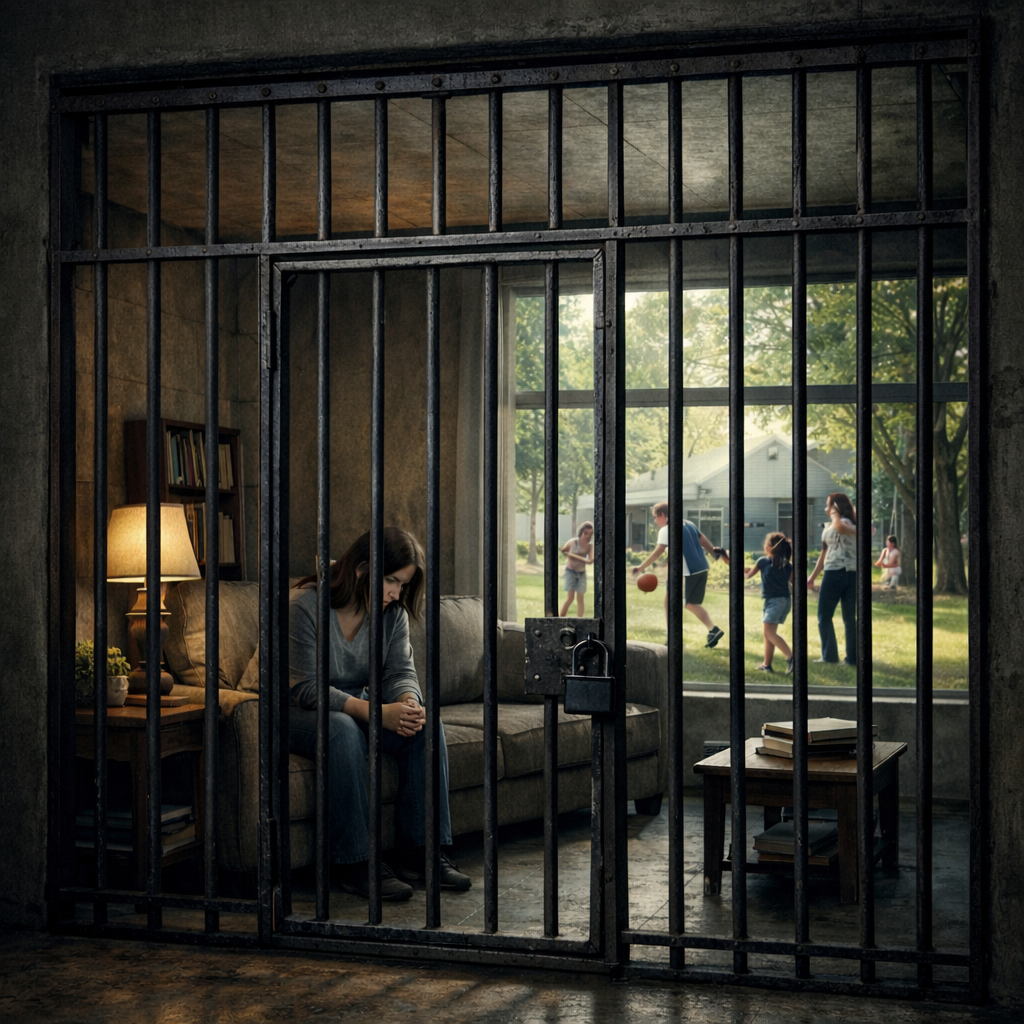
I lived inside that prison for decades; physically free, but internally incarcerated.
Not because I was guilty, but because I had been trained to carry guilt that was never mine.
This chapter is for women who were healed by Jesus, yet still lived as though they were on trial.
It is for women who were forgiven, yet continued to punish themselves.
It is for women who were set free spiritually, but remained locked inside emotional cells built long before they had language for what was happening to them.
Teaching: Two Kinds of Guilt
Scripture makes a clear distinction between conviction and false guilt, though they are often confused.
Conviction is specific.
It leads to repentance.
It produces humility, clarity, and change.
It calls a person higher without crushing their spirit.
False guilt is different.
False guilt is vague.
It is relationally imposed.
It is reinforced through fear, silence, and control.
It attaches itself to identity rather than behavior.
False guilt does not say, “This action needs to change.”
It says, “You are the problem.”
This kind of guilt does not come from the Holy Spirit.
It comes from generational dysfunction, adverse childhood experiences, and family systems that use shame and fear to regulate behavior.
Scripture Discerns the Source of Guilt
2 Corinthians 7:10 says, “Godly sorrow brings repentance that leads to salvation and leaves no regret, but worldly sorrow brings death.”
Godly sorrow leads toward life, repentance, and restoration. False guilt leads toward shame, silence, and despair. When guilt produces fear, self-erasure, or emotional imprisonment, Scripture is clear about its source.
Galatians 5:1 reminds us, “It is for freedom that Christ has set us free. Stand firm, then, and do not let yourselves be burdened again by a yoke of slavery.”
False guilt functions like a yoke. It binds rather than frees. Jesus does not place burdens on healed women; He removes them.
Colossians 2:20-23 warns against systems of control that appear spiritual but actually produce shame, false humility, and powerlessness. These imposed rules have “an appearance of wisdom,” yet lack the power to transform the heart.
Proverbs 29:25 summarizes it when it says, “Like cold water to a weary soul is good news from a distance land.”
Toxic guilt forms when:
love is unpredictable
control replaces connection
silence replaces truth
image matters more than healing
shame is handed to children to carry
emotions are weaponized
belonging becomes conditional
Toxic guilt does not form overnight. It is conditioned slowly, relationally, and often invisibly. It develops in environments where children must adapt in order to stay emotionally safe.
1. Unpredictable Love + Control
Love is unpredictable
Control replaces connection
Belonging is conditional
Unpredictable Love + Control
In homes where love is unpredictable, children learn quickly that safety depends on behavior. Affection may be present one moment and withdrawn the next. Because connection feels fragile, control replaces relationship. Rules, moods, and expectations become tools for managing fear rather than building trust. Over time, children internalize the belief that belonging must be earned. When belonging is conditional, guilt becomes a strategy: “If I do better, if I stay smaller, if I don’t upset anyone, I can stay.”
2. Silence + image
Silence replaces truth
Image matters more than healing
Silence and Image as Control
In homes where silence prevails, truth is treated as dangerous. Problems are not addressed; they are hidden to protect appearances. Children learn early which questions cannot be asked and which emotions must be swallowed. Peace is maintained, but at the cost of honesty.
When image matters more than healing, speaking up is seen as betrayal, and suffering must remain unseen to preserve the family narrative. Silence is praised as strength, while truth is labeled divisive or unforgiving. Over time, a woman learns that survival depends on staying quiet. Scripture speaks plainly: “Whoever conceals their sins does not prosper” (Proverbs 28:13). Where silence rules, wounds go unhealed; not because help is absent, but because truth has been denied.
3. Shame as Regulation
Shame and fear used to regulate behavior
Emotions weaponized
Children carrying adult pain
Shame and Fear as Regulation
In some family systems, shame and fear are used to control behavior instead of guidance, love, or truth. Children learn quickly that approval can be withdrawn, anger can be punished, and honesty can cost them connection. Rather than being taught right from wrong, they are taught how to avoid consequences.
Over time, fear replaces trust, and guilt becomes a way to stay safe. Scripture names this clearly: “Fear of man will prove to be a snare” (Proverbs 29:25). When fear governs a home, guilt often becomes the prison that keeps a woman silent long after the danger has passed.
When a child grows up inside these conditions, guilt becomes a survival strategy.
The nervous system learns that safety depends on appeasing others.
The child learns to manage adult emotions instead of being allowed to have their own.
Psychology calls this parentification and emotional coercion.
Scripture calls it a burden too heavy to bear.
Jesus spoke directly to this in Matthew 23:4 when He said,
“They tie up heavy, cumbersome loads and put them on other people’s shoulders.”
False guilt shapes identity long before a woman has language for what she is experiencing.
This is the guilt the woman in Mark 5 carried.
This is the guilt I carried.
Why the Woman Trembled
The woman in Mark 5 did not tremble because she was healed.
She trembled because she was about to be seen.
For twelve years, she had lived under laws and cultural expectations that framed her existence as a problem.
Her condition was not only physical; it was moralized.
She had been taught that her presence contaminated others.
When Jesus called her forward, He was not threatening her.
But everything in her nervous system expected punishment.
Trauma teaches the body before the mind understands.
Psychology confirms that when someone has lived under prolonged shame or coercive control, the body reacts to visibility as danger—even when safety is present.
Her trembling was not lack of faith.
It was conditioned fear.
And yet, Scripture says she “told him the whole truth.”
This matters.
Jesus did not heal her and then leave her alone with her guilt.
He invited truth into the open so the prison could no longer hold her.
My Heart Story: Learning to Live Inside the Cell
When I came home after the cliff: after the coma and after two weeks in the mental ward where professionals told me I was emotionally aware, compassionate, and grounded enough to help other teenagers, I returned to a home shaped by decades of unspoken pain.
My daddy was relieved I was alive.
He loved me the best he could through his own brokenness and addiction.
My mother carried deep, unresolved childhood wounds of her own.
Fear governed her world: fear of exposure, fear of judgment, fear of what others would think.
That fear shaped how she related to me.
Instead of allowing my story to be spoken so healing could begin, she used it to silence me.
The sentence was clear and unmistakable:
“If you tell anyone you tried to kill yourself, I will tell them you were in a mental ward.”
This was not protection.
This was manipulation.
This was coercion.
This was control.
That sentence taught me:
telling the truth was dangerous
my voice caused harm
my pain brought shame to the family
healing must remain hidden
silence was safer than honesty
I was a child being shaped by someone else’s unresolved trauma.
My mother told me often that I had ruined her life.
Those words became the soil where toxic guilt took root.
I learned to carry responsibility for everyone else’s emotions.
I learned to shrink so others felt comfortable.
I learned to apologize for existing.
I learned to live carefully, cautiously, quietly.
I carried guilt that belonged to my mother; not to me.
And I carried it for more than thirty years.
How Guilt Becomes a Prison
False guilt does not announce itself as imprisonment.
It disguises itself as responsibility, loyalty, humility, or love.
When guilt becomes identity, a woman begins living inside an internal cell, even when the door is unlocked.
When guilt becomes your prison, you may:
question your worth even in safe places
anticipate rejection
seek relationships that repeat old wounds
mistake control for love
apologize for having needs
hide truth to keep peace
attach to people who validate your guilt
lose your voice without realizing it
This is not weakness.
This is survival.
Psychology explains that children raised in unpredictable or shame-based environments develop hypervigilance.
They learn to scan for emotional shifts.
They adapt by minimizing themselves.
Scripture explains the same reality in Proverbs 29:25:
“Fear of man will prove to be a snare.”
A snare is a trap you don’t see until you’re caught.
The woman in Mark 5 hid because guilt told her she did not deserve healing.
I hid because guilt told me I did not deserve to speak.
Both of us learned lies that Jesus came to confront.
Conviction vs. False Guilt
Romans 8:1 (NIV) says:
“Therefore, there is now no condemnation for those who are in Christ Jesus.”
Condemnation and conviction are not the same.
Conviction leads to repentance and restoration.
Condemnation leads to shame and hiding.
False guilt keeps a woman imprisoned even after Jesus has set her free.
Jesus never uses guilt to heal a woman.
He uses truth, love, and dignity.
Psalm 34:5 (NIV) declares:
“Those who look to him are radiant; their faces are never covered with shame.”
Shame cannot coexist with the presence of Jesus.
If shame remains, it is not because Jesus failed; it is because lies are still operating.
What Jesus Does with False Guilt
Jesus does not agree with guilt born from fear or manipulation.
He does not accept guilt placed on a child by wounded parents.
He does not bless generational patterns of emotional control.
He breaks them.
He calls women forward.
He invites truth.
He separates identity from inherited wounds.
He shines light where silence once ruled.
Isaiah 54:4 (NIV) says:
“Do not be afraid; you will not be put to shame.
Do not fear disgrace; you will not be humiliated.
You will forget the shame of your youth
and remember no more the reproach of your widowhood.”
Jesus is not intimidated by generational pain.
He enters it to interrupt it.
Conversational Pause for Beloveds
Pause here… not to analyze, but to notice.
What guilt have you been carrying that was never yours to carry?
Who taught you that your voice was dangerous?
Where did silence become safer than truth?
What emotions did you learn to manage that were not yours to manage?
Jesus does not ask these questions to accuse.
He asks them to unlock prison doors.
Living Outside the Cell
Freedom does not always feel free at first.
When guilt has been a lifelong companion, its absence can feel disorienting.
The nervous system may need time to learn safety.
Healing is not only spiritual—it is neurological.
Jesus heals the soul, and He patiently retrains the body.
False guilt says, “You are responsible for everyone.”
Jesus says, “My yoke is easy and my burden is light” (Matthew 11:30).
You were never created to carry guilt.
You were created to carry grace.
Reflection Questions
What guilt have you been carrying that was never yours to carry?
Who taught you to shrink or stay silent?
How has guilt shaped your relationships and choices?
What truths begin to rise when you imagine living without guilt?
Where do you sense Jesus separating you from generational patterns now?
Closing Blessing
May the weight of false guilt lift from your shoulders.
May you recognize what was yours and what was never meant for you.
May the silence that once protected you become unnecessary.
May the voice of Jesus speak louder than every inherited lie.
You were not created to carry guilt.
You were created to carry grace.
You are His; and He is not ashamed of you.
Until next time…
Keep being Beautiful You!

Haven Hearts Bible Study - Week 6 - When Jesus Stops for You!

When Jesus Stops for You!
Haven Hearts Bible Study - Week 6 -
When Jesus Stops For You!
“And a woman was there who had been subject to bleeding for twelve years. She had suffered a great deal under the care of many doctors and had spent all she had, yet instead of getting better she grew worse. When she heard about Jesus, she came up behind him in the crowd and touched his cloak, because she thought, `If I just touch his clothes, I will be healed.’ Immediately her bleeding stopped and she felt in her body that she was freed from her suffering.
At once Jesus realized that power had gone out from him. He turned around in the crowd and asked, `Who touched my clothes?’ `You see the people crowding against you,’ his disciples answered, `and yet you can ask, ‘Who touched me?’ But Jesus kept looking around to see who had done it. Then the woman, knowing what had happened to her, came and fell at his feet and, trembling with fear, told him the whole truth. He said to her, `Daughter, your faith has healed you. Go in peace and be freed from your suffering.’”
Mark 5:25–34 (NIV)
Study Theme
There are seasons when what once wounded us returns disguised as love, safety, or familiarity. Because of past wounds and learned survival patterns, we may confuse what feels familiar with what is truly life-giving. Scripture reminds us that not everything familiar reflects the heart of God, and not everything called “love” brings freedom or wholeness. This study explores how personal wounds and generational brokenness can distort our understanding of love; and how Jesus, with both truth and compassion, gently exposes what is false and restores what has been wounded.
Introduction: Faith, Fear, and the Moment Power Is Drawn
There are moments in Scripture when the miracle is not only what is healed, but what interrupts Jesus Himself. Mark 5:25–34 records one of the most emotionally charged, public, and psychologically intense encounters in the Gospels. A woman reaches. Power moves. Fear erupts. And Jesus stops everything.
This chapter is centered on that interruption.
For twelve years, this woman lived inside limitation. Mark tells us she “had been subject to bleeding for twelve years” (Mark 5:25, NIV). Twelve years is long enough for pain to reshape identity. Long enough for disappointment to train expectations. Long enough for fear to become familiar.
Her condition did not only affect her body. According to Jewish law, she was ceremonially unclean. That meant separation from worship, strained relationships, and constant social isolation. Her presence carried consequence. Over time, fear taught her how to survive.
Stay quiet.
Stay back.
Don’t touch.
Don’t disrupt.
Fear became protection.
Loneliness became routine.
Invisibility became safety.
And yet, Scripture tells us something extraordinary.
She moves.
“When she heard about Jesus, she came up behind Him in the crowd and touched His cloak” (Mark 5:27, NIV). That single sentence compresses twelve years of isolation, fear, and restraint into one bold act of COURAGEOUS FAITH. Entering a crowd was dangerous. Touching anyone risked exposure. Touching a rabbi could have resulted in public rebuke or punishment.
But she is driven by something stronger than fear.
She says to herself, “If I just touch His clothes, I will be healed” (Mark 5:28, NIV).
This is not desperation untethered from belief.
This is FAITH.
FAITH formed in isolation.
FAITH exercised under fear.
FAITH embodied through action.
Hebrews 11:1 defines faith as “confidence in what we hope for and assurance about what we do not see.” This woman lives that definition. She moves before proof. She reaches without permission. Her body participates in belief.
She has nothing to lose.
And Scripture is clear: her FAITH works.
“Immediately her bleeding stopped and she felt in her body that she was freed from her suffering” (Mark 5:29, NIV). Healing begins instantly. Power flows. Something irreversible has happened.
But healing does not yet feel safe.
When Jesus Feels Power Leave Him
“At once Jesus realized that power had gone out from Him” (Mark 5:30, NIV).
This is the turning point.
Jesus does not guess. He does not wonder. He knows. This was not accidental contact in a crowded space. This was intentional faith that drew power. Scripture repeatedly shows that power flowing from Jesus is purposeful. Luke 6:19 tells us, “Power was coming from Him and healing them all.”
Power leaving Jesus is not loss.
It is fulfillment.
But for the woman, this realization would have been terrifying.
Trauma survivors often believe that receiving care costs others too much. Many live with an internal narrative that says, If I take what I need, someone else will suffer. When Jesus feels power leave Him, fear would have interpreted that sensation as danger.
I took something.
I went too far.
I wasn’t supposed to receive this.
Fear distorts generosity. Trauma teaches that love is limited and conditional. Jesus interrupts that lie by stopping and naming the moment.
“Who Touched Me?” Fear at the Edge of Healing
Jesus turns and raises His voice.
“Who touched Me?” (Mark 5:30, NIV)
This is not a quiet question.
This is a public announcement.
The crowd hears it.
The disciples react.
Time slows.
The disciples try to minimize the moment. “You see the people crowding against you,” they say (Mark 5:31, NIV). In other words, Why make this a big deal?
But Jesus refuses to minimize what matters.
Luke tells us Jesus “kept looking around to see who had done it” (Luke 8:44, NIV). He waits. He holds the tension. This is not cruelty. This is love that understands something essential: fear must be exposed to be healed.
Psychologically, this is the most dangerous moment in the entire story.
Healing has happened in her body, but fear now threatens to sabotage it. Trauma does not release simply because symptoms stop. Fear argues fast:
You crossed a line.
You took something that wasn’t yours.
You will be exposed.
You will be punished.
Fear could have driven her away.
This matters because fear can keep a person from receiving total healing. Healing is unfamiliar. Pain is known. Isaiah 53:4 tells us, “Surely He took up our pain and bore our suffering.” Jesus is not surprised by the cost, but she does not yet know that love is about to meet her fear.
Jesus holds the moment open so fear cannot send her running…
Think about what the woman with the issue of blood could be sensing and feeling compounded by the fact that her desperation has left her with nothing but fear.
Trembling Truth and the Body’s Response
Mark tells us the woman comes forward “trembling with fear” (Mark 5:33, NIV). This trembling is not doubt. It is the nervous system discharging years of stored terror. Trauma lives in the body. Fear that once protected her is now being asked to let go, and the battle begins…
She falls at His feet.
She tells Him “the whole truth.”
Not a polished testimony.
Not a sanitized version.
The whole story.
Psalm 32:3–5 reminds us that silence keeps the body sick, but truth brings release. Psychologically, this moment is narrative integration; her story becoming whole instead of fragmented.
Fear is now fully exposed.
Remember, Jesus’ voice rang out, “Who touched me?” Due to trauma and the length of her suffering, her body probably betrayed her before her mind could answer due to twelve years of suffering in silence.
The trembling began in her hands and spread, a violent shudder she could not stop. Twelve years of hiding surged to the surface, every lesson learned the hard way: Do not be seen. Do not be known. Do not reach. Her heart slammed against her ribs, not with hope now, but with terror. The crowd that had pressed around her moments before suddenly felt like a net tightening.
Her breath caught, shallow and panicked. Muscles locked as though flight might tear her apart and stillness might condemn her. She could neither run nor speak. She stood suspended between impulses; every instinct screaming at once. To flee meant exposure. To remain meant judgment. To speak meant punishment.
Her mind fractured under the weight of it. Logic abandoned her. Words dissolved. All that remained was sensation: the roar of blood in her ears, the burning certainty that she had crossed a line never meant for her to cross. She had touched holiness with unclean hands. She had dared to hope.
And now she was visible.
The healing still hummed through her body, undeniable and real, but fear eclipsed it; fear that this miracle would become her sentence. Twelve years of isolation pressed down on her chest, and she felt suddenly small again, as though her body were trying to disappear before the crowd could turn.
“Daughter” — Identity Restored Before Explanation
Jesus answers her with one word.
“Daughter.”
This is attachment language. Family language. Covenant language. It is the only time in the Gospels Jesus uses this word this way.
Fear expects rejection.
Love offers belonging.
“Daughter” means she did not steal power; she received healing.
“Daughter” means she is not in trouble; she belongs.
“Daughter” means she is safe.
Galatians 4:7 declares, “You are no longer a slave, but God’s child.” In one word, Jesus restores identity before behavior, worth before explanation.
Trauma fractures identity first.
Jesus heals it first.
Faith Named Out Loud
Then Jesus speaks the truth everyone needs to hear.
“Your faith has healed you” (Mark 5:34, NIV).
Not His power.
Not her audacity.
Her FAITH.
This public affirmation protects her healing from shame and fear. Fear cannot argue when truth is spoken aloud. Romans 8:15 reminds us that we did not receive a spirit of fear, but the Spirit of adoption.
Jesus raises His voice not to glorify Himself, but to make her healing undeniable; to her, to the crowd, and to every system that taught her she should stay invisible.
“Go in peace and be freed from your suffering” (Mark 5:34, NIV).
Peace here is not calm.
Peace is wholeness.
Nothing missing.
Nothing broken.
Healing That Is Seen and Secured
What Jesus does here is not only miraculous; it is intentional. He does not allow her healing to remain hidden, private, or unnamed. Trauma thrives in secrecy, but restoration requires witness. By calling her “Daughter” and affirming her faith aloud, Jesus ensures that what was restored internally is also secured externally. Her body is healed, her identity is reclaimed, and her place in the community is reestablished.
This moment reveals the heart of God toward those who have learned to survive quietly. Jesus does not rush past trembling faith or dismiss fearful obedience. He stops. He sees. He names. And He speaks peace where fear once ruled. For those who have lived on the margins: marked by shame, exclusion, or long seasons of silence, this passage reminds us that Jesus does not merely remove suffering; He restores belonging. Healing is not complete until the wounded know they are safe, seen, and claimed.
The same Jesus who refused to let her remain invisible still speaks this way today. He restores identity before performance, belonging before explanation, and peace before understanding. As we turn to the Scriptures that anchor this truth, we listen not just for information, but for the voice that still calls His children by name.
Anchor Scripture Cross-References (NIV)
Mark 5:25–34 — The core passage: healing, exposure, and identity restored through Jesus’ voice
Luke 8:43–48 — A parallel account emphasizing fear, trembling, and Jesus’ intentional seeing
Isaiah 53:4 — The cost of healing: suffering carried, not dismissed
Hebrews 11:1 — Faith defined not as certainty, but as trust before sight
Psalm 32:3–5 — The healing that follows truth spoken and shame released
Galatians 4:7 — Identity restored: no longer slave, but child
Romans 8:1, 15 –- Freedom from condemnation and fear; the Spirit of adoption
Together, these Scriptures reveal a consistent pattern: God heals not only bodies, but identities; calling His children out of fear, secrecy, and silence into peace and belonging.
Reflection Questions for the Week
1. Where has fear kept you from fully receiving God’s healing?
2. What parts of your story have expected judgment instead of restoration?
3. How does Jesus calling this woman “Daughter” challenge or reshape your understanding of your own worth?
4. In what ways has healing felt unfamiliar, uncomfortable, or even threatening to you?
5. What stirs in your heart when you hear Jesus say, “Your faith has healed you”?
Optional Application Question
6. This week, how can you intentionally notice or respond to God’s voice calling you by name, reminding yourself of your belonging, worth, and freedom, especially in moments of fear or uncertainty?
Closing Prayer
Jesus, You see what others overlook. You stop for trembling faith. You speak belonging before explanation and peace before understanding. For every place where fear has taught us to hide, where wounds have shaped how we understand love, we receive Your voice again, calling us not by our condition, but by our identity. Restore what has been fractured. Quiet what has been afraid. Let Your peace settle into our bodies, our stories, and our faith. Teach us to live not as those reaching in secret, but as children who belong. Amen.
Weekly Benediction
May you go in the peace Jesus speaks; the peace that makes you whole.
May fear loosen its grip as truth is named aloud.
May you remember that you are not hidden, not condemned, not unworthy.
You are seen. You are healed. You are His.
Go in peace, and be free.
Until next time…
Keep being Beautiful You!